
1
2011
Cost Units and Composite Cost Units
The term “Cost Unit” can be defined as a unit of product or service in relation to which costs are ascertained. As an example cost unit for a mobile telecommunication provider would be call minutes. Cost unit can be tangible and intangible in nature. Examples of tangible cost units are garments produced at apparel manufacturing firms, loaves of bread produced at bakeries, bars of soap produced by soap manufactures. However, to handle the large bulk of cost units and to [...]
11
2011
Crossing of Cheques
A cheque is a negotiable financial instrument we use to settle payments. A cheque can be lost, stolen or the signature of payee can be done by someone else pretending him/her and that’s why the protection of cheques has increased according to an international standard that we must thoroughly consider when writing a cheque. Crossing is a popular method of protecting the payer and payee of a cheque. Both bearer and order cheques can be [...]
1
2011
Ratios
Capital Gearing Ratio Capital gearing ratio is using to analyze the capital structure of a company. Formula: Capital Gearing Ratio = Equity Share Capital / Fixed Interest Bearing Funds Dividend cover This measures how many times a company can pay dividends over the profit. Ex: if dividend cover is 5, that means the company’s profit attributable to shareholders was 5 times the amount what the dividend cover exactly is. Formula: Dividend cover = Earnings per [...]
31
2011
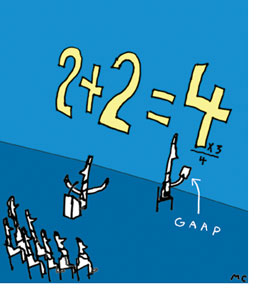
Basics of Generally Accepted Accounting Principles (GAAP)
Basic objectives Financial reporting should be rich with information that is Useful to provide information to potential investors and creditors and other financial market users in making rational investment, credit, and other financial decisions. Helpful to assess the amounts, timing, and uncertainty of prospective cash receipts. Key to make financial decisions. About economic resources, the claims and the changes in those resources. Improving the performance of the business Provide information to make long-term decisions. Useful [...]
15
2011
Basic Accounting Concepts
These are the broad basic assumptions under which financial statements are prepared and these principles are used by the entire profession in preparing financial accounting information.
Recent Posts
- How to populate a dropdown menu from database in CodeIgniter [Workaround]
- How to Overclock Samsung Galaxy Mini Upto 800MHz
- Current and Future Relavance of Business Excellence / Improvement to Argos UK Ltd. Possible Benefits and Likely Inhabitors Exists
- What can Harm Your Online Reputation?
- Does Race Matter in the Choice of Popular Music among Youngsters?
The Tutebox
- Accounting
- Android Tips
- Apps
- Business
- C / C++
- Computers
- Database
- Design Patterns
- E-Commerce
- Economics
- Electronics
- Entertainment
- Finance
- Functional Programming
- Games
- Hardware
- Health
- HRM
- International Business
- Internet
- iOS Tips
- JAVA
- Life Style
- Linux
- M-Commerce
- Management
- Marketing
- Mathematics
- Mobile
- MS Office
- Network
- PC
- Personal Development
- Photography
- PHP
- Physics
- Places
- Programming
- Science
- Software
- Statistics
- Tweaks
- Visual Studio
- Web Hosting
- Windows


An article by